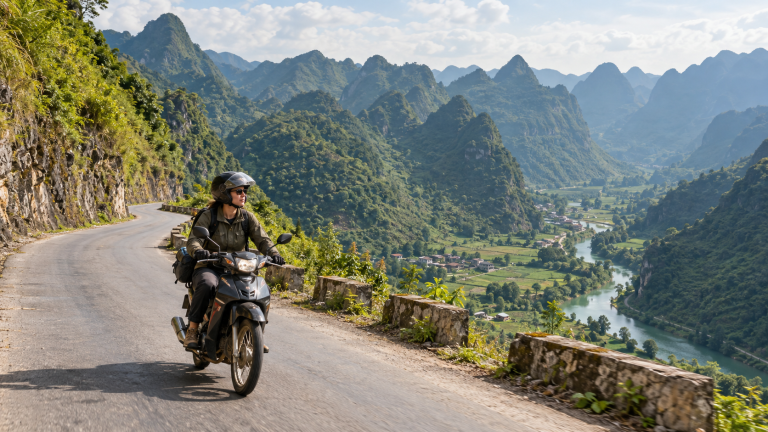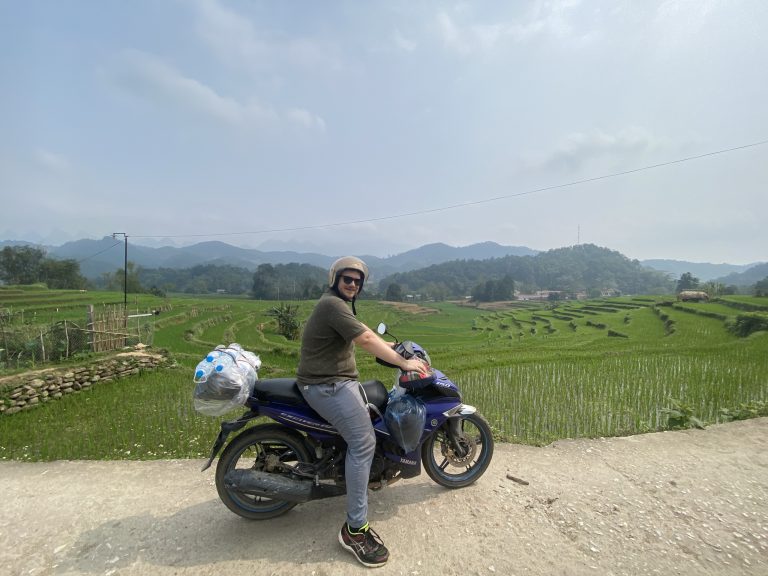
You can travel directly from Sapa to Ha Giang without returning to Hanoi.
For most travelers, the easiest option is a direct bus or limousine. The journey usually takes around 5.5 to 6.5 hours, although traffic, weather, and mountain road conditions can make it longer.
Private transfers are also available and give you more flexibility, but they cost considerably more.
The important question is not simply how to get from Sapa to Ha Giang.
It is how to fit the transfer into your trip without wasting a day or starting the Ha Giang Loop tired.
For most travelers, the easiest plan is:
Sapa → daytime transfer → overnight in Ha Giang → start the Loop the next morning.
That gives you enough time to enjoy both destinations without rushing the journey between them.
How Far Is Sapa from Ha Giang?
Sapa and Ha Giang look relatively close on the map.
But travel times in northern Vietnam are often longer than the distance suggests.
The road crosses mountainous areas, and buses make stops along the way.
Current transport listings normally show journey times of roughly 5.5 to 6.5 hours between Sapa and Ha Giang.
You do not need to travel back through Hanoi.
If both Sapa and the Ha Giang Loop are part of your northern Vietnam itinerary, going directly between them is normally the most efficient option.
For a more detailed look specifically at the transport side of the journey, this Sapa to Ha Giang transport guide covers the route from the Sapa side.
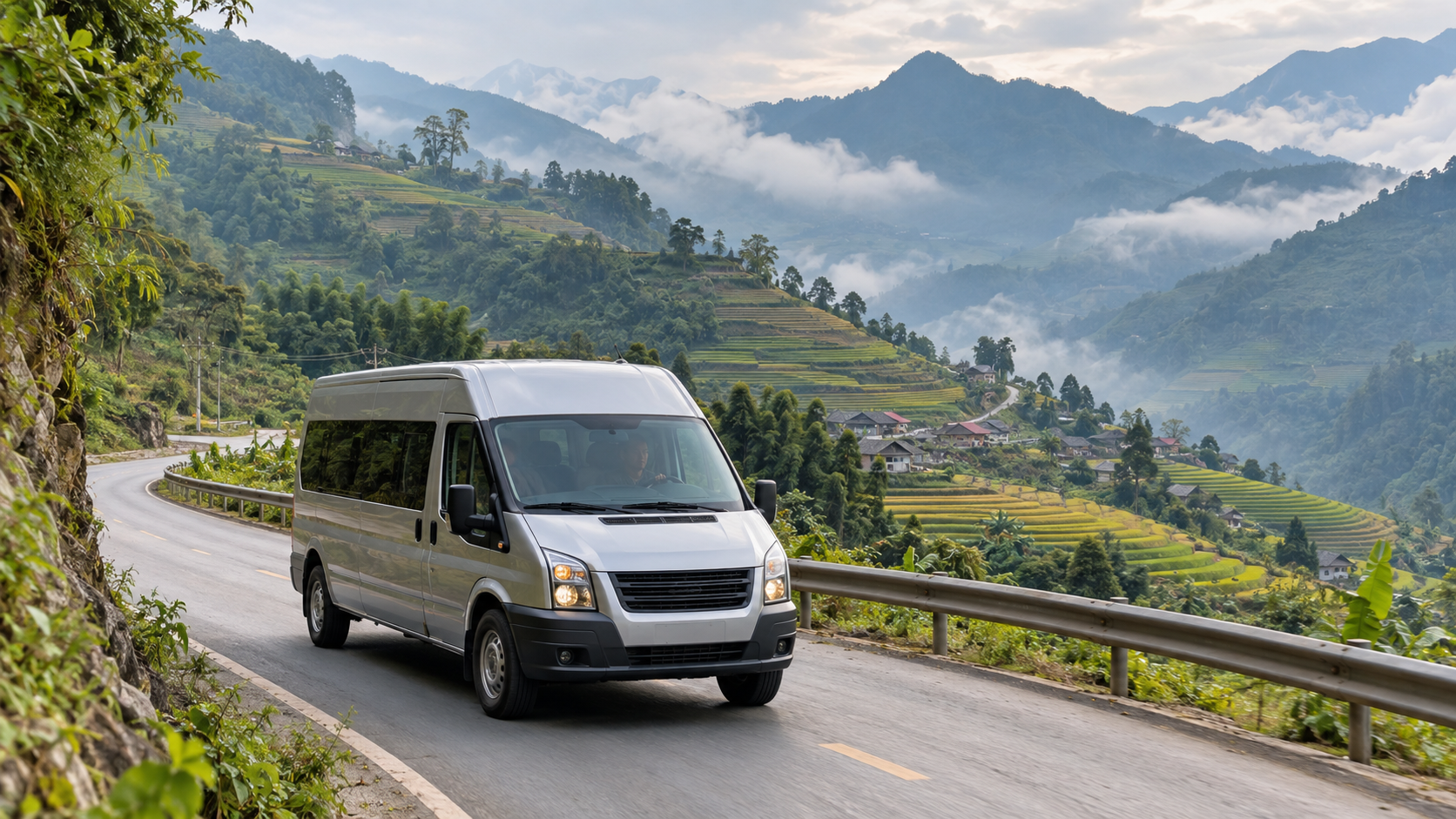
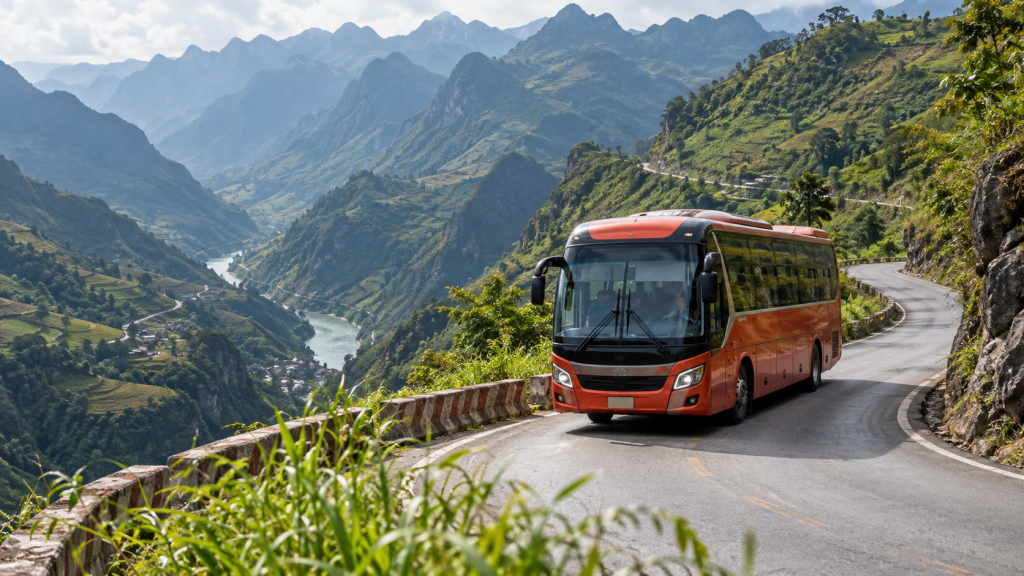
Sapa to Ha Giang Transport Options
For most travellers, there are three realistic choices:
| Bus / Sleeper | Limousine Van | Private Transfer | |
|---|---|---|---|
| Typical travel time | Around 6–7 hours | Around 6 hours | Around 5–6 hours |
| Cost | Lowest | Low to moderate | Highest |
| Privacy | Low | Low | High |
| Flexibility | Low | Low | High |
| Best for | Budget travellers | Most travellers | Families and private groups |
The exact departure time, vehicle, and pickup point depend on the operator.
Do not choose only because a vehicle is advertised as “VIP” or “limousine.”
Those terms can describe very different vehicles in Vietnam.
Check the actual seat or berth type, departure location, and estimated arrival time before booking.
Direct Bus from Sapa to Ha Giang
A direct bus is normally the cheapest option.
There are departures throughout the day, including morning, afternoon, and evening services.
Depending on the operator, you may travel in a standard bus, sleeper, cabin bus, or smaller limousine-style vehicle.
Current fares commonly start at around 270,000–350,000 VND, although some services cost more.
Treat that as a planning range rather than a fixed price.
Fares can change depending on:
-
the operator;
-
vehicle type;
-
departure time;
-
weekends;
-
Vietnamese public holidays;
-
demand.
Always check the actual price and timetable for your travel date.
Limousine or Sleeper Bus?
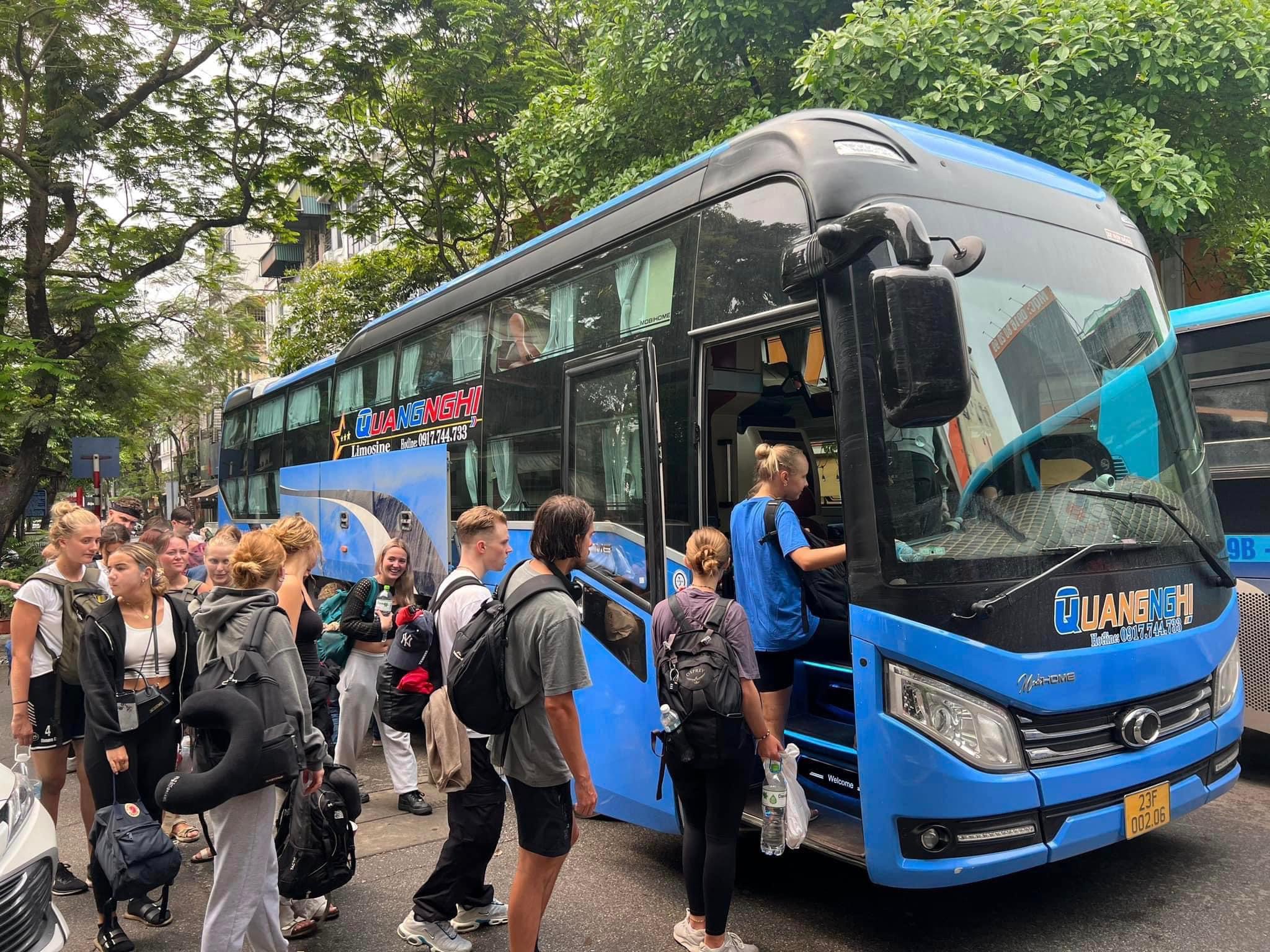
For a daytime journey of around six hours, many international travelers prefer a limousine-style vehicle.
You sit normally and usually have a smaller number of passengers.
A sleeper or cabin bus gives you more room to recline and may be preferable if you are leaving later in the day.
Neither is automatically better.
The more useful question is:
What time will this vehicle get me to Ha Giang?
A comfortable bus arriving at midnight may be less useful than a simpler vehicle arriving at 14:00 if you want to prepare for the Loop.
Choose the schedule first.
Then compare the vehicle.
What About a Private Transfer?
A private car is considerably more expensive than a bus, but it gives you much more control.
You can normally arrange pickup directly from your hotel in Sapa and travel directly to your accommodation in Ha Giang.
A private transfer makes the most sense if you are:
- travelling with children;
- travelling with several friends;
- carrying a lot of luggage;
- uncomfortable using buses;
- travelling on a tight schedule;
- willing to pay more for door-to-door transport.
For a solo traveller, the price usually makes it difficult to justify.
For a family or group sharing one vehicle, it can make more sense.
Should You Travel During the Day?
For most travelers, I would choose a morning departure.
Leave Sapa around the morning, and you can normally reach Ha Giang during the afternoon.
That gives you enough time to:
- check in;
- eat;
- Organize your luggage;
- confirm the tour details;
- prepare a small bag;
- Sleep properly before the Loop.
You lose part of a day to transport.
But that is better than pretending the transfer day does not exist.
Sapa to Ha Giang is long enough that it deserves its own place in your itinerary.
Can You Travel from Sapa to Ha Giang at Night?
Yes.
Evening buses are available.
They can be useful if you want to spend more of the day in Sapa.
But there is an important downside.
The journey is only around six hours.
That means you may arrive in Ha Giang around midnight or shortly afterwards rather than getting a full night of sleep on the bus.
If you take a late service, confirm that your accommodation will accept you at that hour.
Our Ha Giang hostel and tour base is designed for travelers arriving before and after the Loop, including people coming into Ha Giang by bus.
Can You Start the Ha Giang Loop on the Same Day?
In most cases, I would not recommend planning it that way.
A standard Ha Giang Loop tour starts in the morning.
For example, the 3-day small group Ha Giang Loop begins the route from Ha Giang City in the morning.
A daytime bus from Sapa normally gets you to Ha Giang too late for that.
Trying to start the Loop in the afternoon means compressing the first day, travelling later, and potentially reaching your overnight stop when it is already getting dark.
The cleaner plan is:
Day 1: Sapa → Ha Giang
Day 2: Start the Loop
You arrive rested rather than treating the first mountain day as an extension of a six-hour bus journey.
Where Should You Stay Before the Loop?
Stay in Ha Giang City.
You do not need to travel deeper into the mountains the night before.
Ha Giang City is the normal base for starting the Loop.
Staying there gives you time to:
- organize your tour;
- leave large luggage;
- prepare riding clothes;
- confirm your Easy Rider or bike;
- have dinner;
- sleep before Day 1.
The Ha Giang Road Trip hostel can be used as a base before and after the Loop.
What Should You Do With Large Luggage?
If you arrive from Sapa with a suitcase or large trekking backpack, do not assume you need to take everything on the Loop.
A small backpack is much easier.
For a normal 3- or 4-day trip, you mainly need:
- clothes;
- rain protection;
- toiletries;
- medication;
- passport and documents;
- phone and charger;
- camera;
- basic personal items.
Ask your accommodation or tour operator about luggage storage before starting.
This is especially useful if Sapa is only one part of a longer Vietnam trip and you are carrying everything with you.
Sapa First or Ha Giang First?
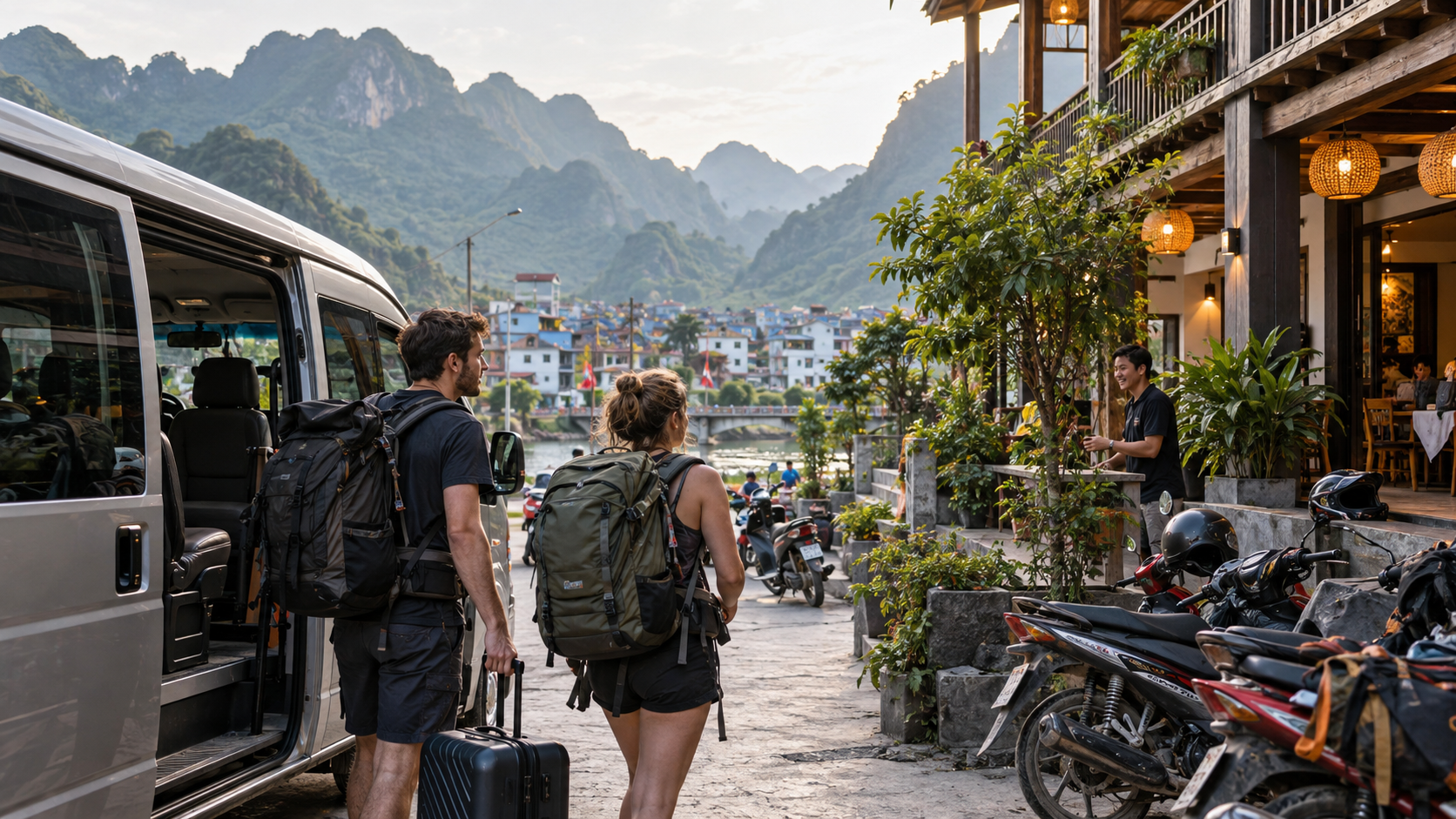
Both directions work.
But Sapa first and Ha Giang second creates a very natural itinerary.
Sapa is usually more concentrated.
You may spend your days trekking, visiting villages, taking the Fansipan cable car, or exploring the town and surrounding valleys.
If you are still organizing that part of the trip, this Sapa travel guide covers the main planning questions around how long to stay, what to do, and how to structure your visit.
Ha Giang then gives you a different type of mountain experience.
Instead of staying around one main base and exploring the surrounding area, you travel through the region.
Each day takes you to a different town, pass, valley, or village.
So although both destinations are in northern Vietnam, they do not feel like the same trip.
Small Group or Private Tour After Sapa?
Travelling from Sapa does not determine what kind of Loop tour you should book.
A solo traveller may prefer a small group because it is social and normally more economical.
A couple may be happy with either.
Families and groups of friends may prefer a private tour.
If you are deciding between them, our comparison of private vs. small group Ha Giang Loop tours explains the practical differences in price, pace, privacy, and flexibility.
That is a separate decision from your Sapa–Ha Giang transport.
What If You Do Not Want to Ride a Motorbike?
You can still do the Ha Giang Loop.
There are three main ways to experience it:
- self-driving;
- travelling with an Easy Rider;
- travelling by private car or SUV.
An Easy Rider drives the motorcycle while you travel as the passenger.
A private SUV avoids motorcycles entirely.
Our guide to the Ha Giang Loop by car vs. motorbike compares SUV, Easy Rider, and self-driving in more detail.
So being uncomfortable with riding does not mean you need to skip Ha Giang.
What About Self-Driving?
Do not decide to self-drive simply because renting a motorbike is easy.
You need actual riding experience and the correct legal documents.
Mountain roads around Ha Giang are not a good place to learn basic motorcycle control.
If you are considering self-driving, read our guide to the Ha Giang Loop license and IDP requirements before deciding.
If you do not meet the requirements or do not feel confident, an Easy Rider is the simpler option.

FAQ
Is there a direct bus from Sapa to Ha Giang?
Yes. Direct buses, sleeper services, and limousine-style vehicles connect Sapa with Ha Giang. You do not need to return through Hanoi.
How long does it take from Sapa to Ha Giang?
Most current services take around 5.5 to 6.5 hours, although some journeys can take longer depending on stops, traffic and road conditions.
How much is the bus from Sapa to Ha Giang?
Many current services cost roughly 270,000–350,000 VND, although prices vary by operator, departure time, and vehicle type. Check your actual travel date before booking.
Should I take a morning or evening bus?
For most travelers, a morning bus is easier because you arrive in Ha Giang during the afternoon and can start the Loop fresh the next morning.
Can I start the Ha Giang Loop immediately after arriving from Sapa?
Usually not if you take a normal daytime service. Standard Loop departures normally begin in the morning, so staying overnight in Ha Giang first is more practical.
How many days do I need for Sapa and Ha Giang?
Around six days is a practical minimum for two days in Sapa, one transfer day and a 3-day Ha Giang Loop. Seven or eight days gives you more flexibility.
Is Sapa or Ha Giang better?
They are different experiences. Sapa works well for trekking, villages, and activities based around one region, while Ha Giang is better experienced as a multi-day road trip.
Can I leave large luggage in Ha Giang during the Loop?
Often yes, but confirm storage with your accommodation or tour operator before arrival. Taking only a smaller backpack on the Loop is usually much easier.
Do I need to ride a motorbike in Ha Giang?
No. You can travel with an Easy Rider or choose a private SUV if you do not want to drive yourself.
Where should I go after Ha Giang?
Many travelers continue to Hanoi. Longer northern routes can also continue toward Cao Bang and Ba Be instead of returning directly south.